

Something subtly peculiar was taking place on a Tuesday nite in January of last year, close to the Barbican in the City of London. One of the oldest churches still standing in London, St. Bartholomew the Great, was filled with nearly a hundred people wearing heavy wool scarves the color of damp earth, tweed blazers, and scratchy corduroy pants. You might think, from a distance, that a retirement society had just finished its annual dinner. It was clear up close that the majority of them were in their twenties.
This was the aftermath of a John Alexander Skelton performance, and the attendees—Skelton’s devoted, somewhat eccentric fan base—did not resemble the people occupying Instagram grids that same week. Don’t wear big puffer jackets. No simple minimalism. No palette approved by the algorithm. Instead, what they wore appeared to have been inherited, or at the very least discovered in a market stall owned by a person who had given up on fashion sometime around 1974.
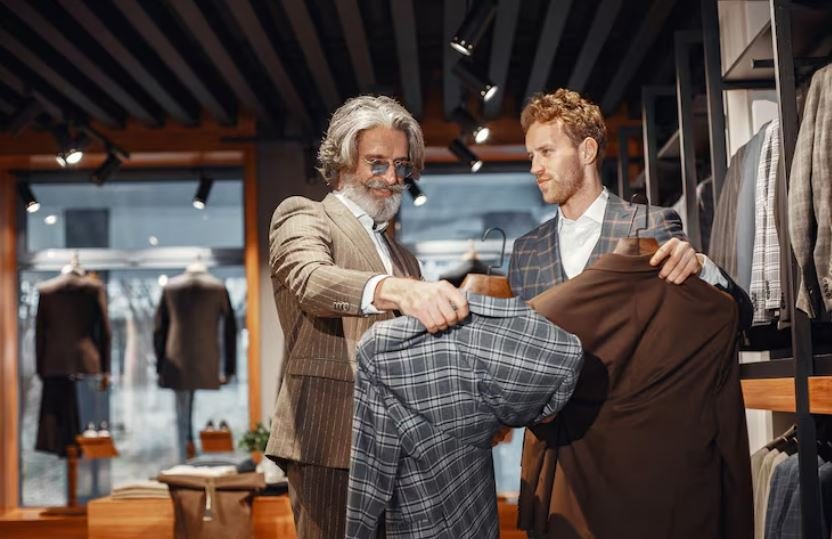
The most fashionable people in London are borrowing clothing from grandfathers rather than influencers, and this change is more significant than it might first seem. For a few years, the so-called “grandpa esthetic” or “grandpa-core” has been quietly developing. The “eclectic grandpa” has become so popular that Pinterest has listed it as a major trend for 2024. The whole point of dressing like a grandfather is that you didn’t go out and buy the look overnight, so this tension is worth looking at.
Grandpa style is genuinely appealing because it symbolizes a wardrobe that has been carefully and gradually amassed over many years. Soft-edged boxy blazers. Loafers had two reseals. Natural-fiber knitwear that doesn’t feel like a polyester knockoff of something. The quality of knitwear has drastically declined over time, as one Vogue essay pointed out, with synthetic blends intended to feel less expensive and last less time replacing natural fibers.
Simply put, the sweater your grandfather wore to Sunday lunches for thirty years was made differently. Even though they can’t always express it, people are reacting to that durability right now.
Influencer Eddie Wailes, Reuben Larkin, and Callum Mullin, all in their twenties, showed up at Ascot last year wearing polished loafers and three-piece tweed suits. One writer described them as “looking like Grandpa Joe on his way to the Chocolate Factory.” Larkin has explained why in a refreshingly straightforward manner: “People expect younger people to dress a certain way. People are confused when we dress like the older generation. In many ways, the motivation behind this entire trend is the desire to challenge presumptions.
The alternative also has a draining quality. Even passive scrollers take in more fashion content than they are aware of because social media algorithms are relentless in what they present. In an article for Vogue Business, Madeleine Schulz explained how algorithms force popular styles on people who aren’t even actively searching, influencing their purchasing decisions without them even realizing it. Choosing to dress like someone who left the trend train in 1982 is a subtle act of defiance for a generation that has grown up completely inside this system. It’s not always aware of it. However, it is reliable.
It is worthwhile to consider the cultural aspect. In this regard, a number of London designers have taken direct inspiration from their own family histories. The Windrush-era fashion of her grandfather’s generation—flat caps, roll-necks, and fleece jackets—was referenced in Grace Wales Bonner’s Lovers Rock collection.
Priya Ahluwalia has talked about how she inherited custom suits made in India by her grandfather, which she currently keeps in her archive. These designers are not engaging in nostalgia for its own sake. It’s a deeper discussion about craft, heritage, identity, and what is passed down when families relocate internationally.
Anyone who is paying attention is aware of the irony that grandpa-core has received over 17 million views on TikTok. A costume, a hashtag, a weekend purchase of a polyamide waistcoat, and an outdated pair of glasses are some examples of this trend that are completely superficial. Additionally, there is a more thoughtful variation that is used by those who are sincerely attempting to break free from the microtrend cycle. The distinction is important. People who fall into the second category—those who discover their style gradually, stick with it for years, and wear it with passion—have always been drawn to London.
It’s difficult not to believe that this particular area of London fashion has discovered something more enduring than a fad when you stand outside a Rising Sun pub after a show and observe a group of people in outdated-looking clothing raising drinks and arguing about fabrics. It remains to be seen if the rest of the city catches up or simply moves past it by spring.
