

At Brunello Cucinelli’s headquarters in Solomeo, Italy, there is a structure that produces nothing. It just makes things better. In order to recreate the original fabric structure of sweaters that arrived at the atelier with moth holes, snags, or the kind of damage that ten years of devoted wear eventually produces, artisans spend their days re-weaving cashmere thread by thread. Since the company’s founding in 1978, there has been a repair department. It completed about 5,000 repairs for customers worldwide in 2019 alone. Additionally, Cucinelli doesn’t charge for the service.
It’s important to pay attention to that final detail because independent luxury menders in London, New York, and Paris charge several hundred dollars to duplicate what Cucinelli provides for free. After years of sustainability discussions that primarily resulted in press releases about recycled polyester and organic cotton tote bags, the economics are peculiar and reveal something genuinely intriguing about where fashion has arrived.
It takes a great deal of time to perform invisible mending, which involves a skilled weaver literally rebuilding a garment’s fiber structure so the repair leaves no visible trace. Before a needle is even inserted into a cashmere piece, it may take hours to match the original yarn weight, twist direction, and color. Professional invisible mending services usually cost between $100 and several hundred dollars per repair for a typical moth hole in a sweater that originally cost $500 or more, depending on the complexity and the reputation of the repairer. Most people don’t think fixing something would cost that much. This type of fee denotes an entirely different transaction.
Maybe that’s the whole point. Although repair is typically more cost-effective than replacement, the customers looking for these services aren’t doing the math. According to studies on garment economics, professional repair can increase a garment’s useful life by three to five years or more, and fixing a high-quality cashmere piece usually costs 60 to 75 percent less than purchasing an equivalent new item.
However, a spreadsheet isn’t the main reason why people send their coats to specialty ateliers. They are driven by something more difficult to measure: the belief that something exceptionally created should endure and that the knowledge needed to restore it is worthwhile in and of itself.
This relates to a more general change in the way a particular type of wealthy consumer views apparel. At least in some circles, the era of conspicuous newness and visible logos has given way to something more subdued. Wearing a flawlessly restored heirloom cashmere coat conveys a relationship with quality that can’t be achieved by merely purchasing a new one.
It displays the subtle signs of a long life and carries the invisible evidence of expert repair. There is a perception that among consumers who can afford to replace anything right away, choosing to repair it instead has become the more thoughtful and consequently more significant option.
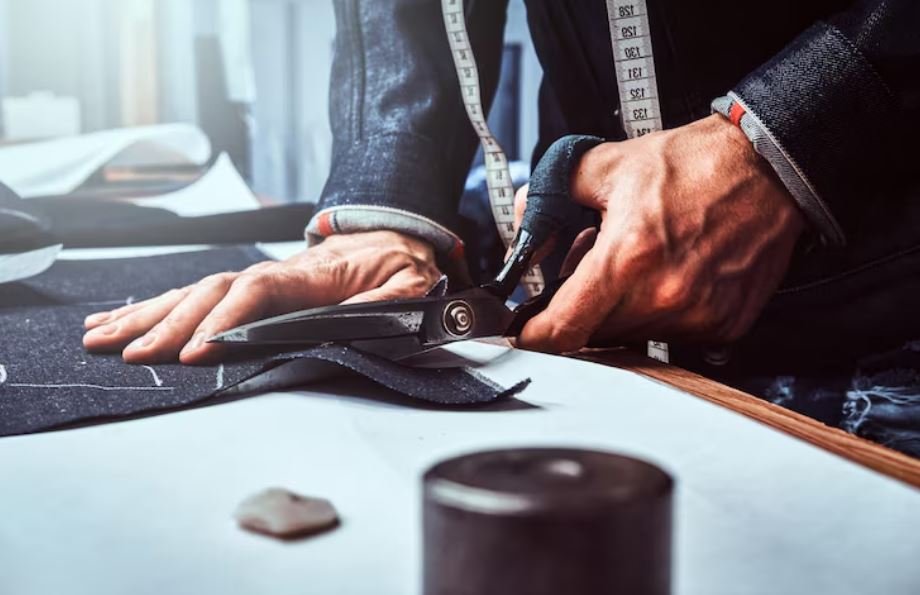
This reasoning served as the foundation for Hermès’s whole identity. The former CEO and artistic director of the company, Robert Dumas, allegedly explained to a successor that Hermès was unique because their products were repairable. That was more than a policy for customer service. It was a declaration of what the brand thought a luxury item ought to be. Something you could keep for a very long time instead of throwing it away when the finish faded.
A fascinating middle ground is occupied by independent menders working outside of branded repair ecosystems. To restore a moth-eaten cashmere cardigan, a specialist in London’s West End might charge £150. This work involves finding yarn, matching colors, and spending several hours at a frame. That charge isn’t exorbitant; in fact, the majority of seasoned menders would argue that it’s hardly sufficient considering the level of expertise required. The problem is that, as mass production made replacement more affordable than repair for nearly everything, invisible mending as a trade all but vanished during the twentieth century. Unexpectedly, the artisans who preserved the knowledge are now in high demand.
Whether this is a long-term cultural shift or a niche preference limited to a tiny portion of the market is still up for debate. Although the global apparel repair services market is expected to grow at a rate of about 8% per year through 2028, indicating significant momentum, it still accounts for a very small portion of total fashion expenditures. There is still fast fashion. The majority of sweaters are still disposed of in landfills.
The attitude has shifted, at least on the higher end. When you pass a tailor’s window in Mayfair and see a gorgeously lit cashmere blazer being repaired with the kind of attention typically reserved for surgical procedures, you can’t help but notice that repair has quietly gained a prestige it hasn’t had since before people assumed that newer always equated to better.
