

The majority of people outside the fashion industry hardly noticed the settlement order signed by a New York State Supreme Court judge in December 2014. When its sublicense expired in February 2015, IMG Fashion, the organization in charge of Mercedes-Benz Fashion Week, was obliged by its terms to leave Damrosch Park at Lincoln Center. In 2013, community organizations filed the complaint, claiming that the public trust doctrine was violated by a twice-yearly private event that turned a 2.4-acre public park into an invitation-only fashion compound. The trees had been cut down. They had moved the benches. At the time, a professor at Fordham Law observed that the general public was obviously “out.”
Regarding the future direction of Fashion Week, no one had a ready response.
It turns out that there was more significance to that question than most people realized at the time. Because the hunt for a solution contributed to the acceleration of a geographical shift that had been quietly developing for years: away from the refined infrastructure of Midtown Manhattan and toward the industrial waterfront on Brooklyn’s western edge, where a very different kind of fashion ecosystem had been developing for years.
Long before the Lincoln Center eviction, ties between NYFW and Manhattan venues were strained. The original house, Bryant Park, had grown too small. Although Lincoln Center offered more space, it also brought its own set of issues. The box-like tents, the quick turnaround times between performances, and the overall sterility of the venue were criticized by designers.
Less than 100 of the more than 300 events that comprised Fashion Week during its Lincoln Center years were actually held there by the end. For years, designers in downtown Manhattan and Brooklyn had been gravitating toward more atmospheric, edgier spaces, preferring hotel ballrooms, converted warehouses, and former factories over the official tents. The decentralization was not brought about by the eviction. It merely codified what was already taking place.
The space, history, and real grit that Brooklyn provided were more difficult to produce than any amount of event production could. The expansive East River warehouses in Sunset Park, DUMBO, and the Brooklyn Navy Yard had walls made of raw brick and concrete that seemed purposeful rather than dilapidated, ceilings high enough to accommodate an entire production, and—most importantly—a price point that Manhattan venues couldn’t match.
For just a few hours of access, the cost of renting a Manhattan showroom or event space for a runway presentation has risen above $100,000. With lighting rigs and production infrastructure that required less creativity to install, Brooklyn’s industrial buildings offered comparable or greater square footage at a fraction of that amount.
For some time now, the city had been placing bets on this. The $136 million “Made in NY” Campus at Bush Terminal in Sunset Park was a component of a larger initiative to reconstruct New York’s garment manufacturing base outside of the traditional Garment District, which had been gradually diminished for decades due to offshoring and growing Midtown rents.
The goal of Bob Bland’s Manufacture New York incubator at Liberty View Industrial Plaza, a former Navy building next to a federal prison, was to unite designers and manufacturers under one roof in the very neighborhoods where the city was now promoting fashion shows. That alignment—a designer showcasing a collection in the same building where some of those clothes were cut and assembled—is genuinely intriguing.
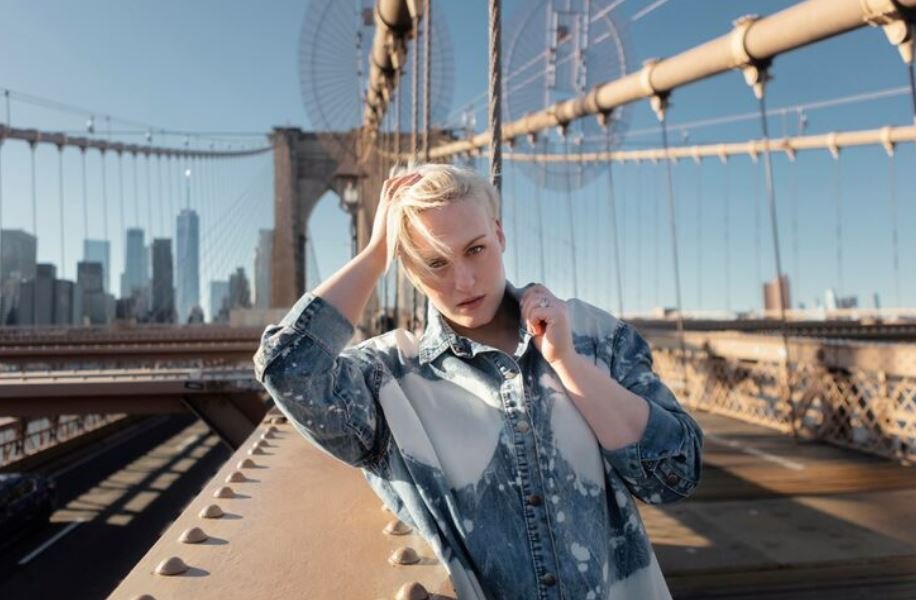
The waterfront in Brooklyn has a genuine esthetic appeal that is probably worth admitting. Fashion, an industry fixated on meaning and image, tends to find the backdrop created by the views of the Manhattan skyline from across the river to be particularly appealing. It also has a built-in symbolism that makes it photographically pleasing. With raw timber beams overhead and the skyline visible through tall industrial windows, standing in a vast converted warehouse in Industry City or Empire Stores in DUMBO accomplishes something that Bryant Park’s white tents never quite managed. Instead of being on display apart from the city, it seems as though the clothing is interacting with it.
Brooklyn’s hold on Fashion Week is still up in the air because rental prices there are rising as well. In another version of this tale, designers are eventually forced out of Williamsburg and Red Hook by the same market forces that drove them out of Manhattan, and the search starts over. For now, though, it’s difficult to deny that the eviction from Lincoln Center was, albeit inadvertently, one of the best things that happened to New York Fashion Week in recent memory as a fully staged runway production takes place across a Sunset Park warehouse floor, with the East River somewhere beyond the loading dock doors.
