

Someone in what appears to be central Berlin, Shoreditch, or Fitzroy is wearing cowboy boots with a tailored blazer and straight-leg jeans, and the comment section is either utterly unconcerned or mildly scandalized. This particular moment keeps coming up on fashion TikTok this year. The same thing is confirmed by both responses. The boot is now somewhere it wasn’t before.
For the most of its history, the cowboy boot has been connected with the American Southwest, country music, rodeos, and a very particular bond with horses that most urban wearers have never experienced. The boot’s current popularity isn’t the only thing that makes it intriguing because Western esthetics come and go quite frequently. It’s that this version has deviated far more from its typical demographic and geographic bounds. The market for cowboy boots is expected to expand from its estimated $14 billion in 2025 to $37.7 billion by 2033, indicating a more structural than seasonal tendency.
This was the result of several forces coming together. Beyoncé’s Cowboy Carter cycle, which included the album, the tour, and the months of cultural discourse it sparked, presented Western iconography to a really global audience in a way that felt joyous rather than cynical or nostalgic. Everyone else’s cultural permission system is altered when a performer of that caliber intentionally and sincerely dons Western clothes.
Concurrently, a number of high-end European brands were already tugging at the Americana thread. With its stacked heel, patinaed leather, and conspicuously lacking the embroidery of classic cowboy boots, Khaite’s 2026 Clive Boot presented a modern, city-ready take on the silhouette rather than a costume. The topic of styling changed from “how do you wear cowboy boots” to “here’s how I wore cowboy boots to work.”
It appears that urban consumers are reacting in part to contrast. For almost ten years, sneakers—especially bulky athleisure silhouettes—have dominated fashion. With its narrow toe, stacked heel, leather structure, and vertical line that completely alters an outfit’s proportions, the cowboy boot is structurally the opposite. It’s working with tailoring, miniskirts, and wide-leg pants in ways that feel genuinely innovative because it’s a true alternative rather than a variation on the current recipe. The fact that 42% of millennial and Gen Z consumers now wear cowboy boots more for fashion than for practical or cultural reasons shows how far the boot has come from its working-ranch roots.
The geographic dispersion is noteworthy. About 21% of the world market for cowboy boots is in Europe, while Asia-Pacific accounts for 19% and is expanding at the quickest rate due to rising disposable incomes and the spread of Western fashion via social media and streaming entertainment. In Seoul or Sydney, the boot, which formerly had a very American meaning, now conveys a different sense: it is self-assured, somewhat paradoxical, and grounded in reality.
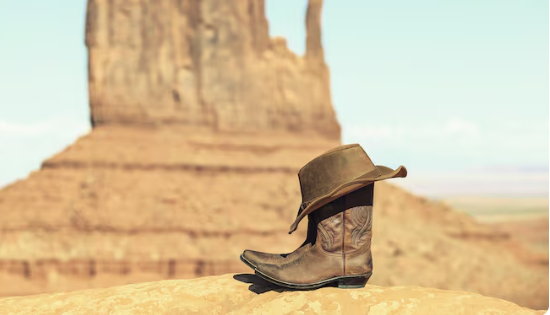
The fact that the best cowboy boots are truly well-made items—pull-on leather construction, no laces to wear out, and a sole that can withstand years of practical use—helps. That durability is important in a fashion moment characterized by quality-conscious consumers wary of trend-driven disposability.
