

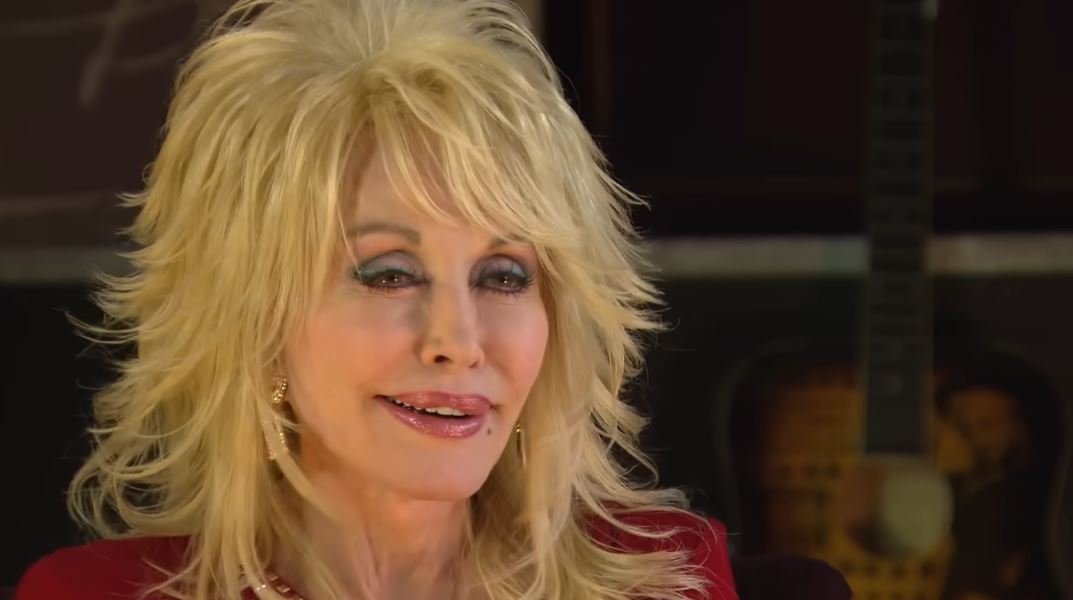
After reading about it, one particular moment has remained with me. At a gay bar, Dolly Parton once participated in a Dolly Parton lookalike competition without disclosing her identity. She didn’t win. Instead of being ashamed, she thought it was a compliment and found it genuinely humorous. You can learn almost everything about the woman from that story, including her humor, self-awareness, and complete comfort with the image she has created for herself. Beneath all those rhinestones, there isn’t much insecurity.
Parton, who passed away in August 2026 at the age of 80, wore an esthetic for over 50 years that some critics deemed “cheap” or “excessive.” However, there is a compelling argument that her appearance was among the most purposefully designed visual statements in American popular culture. Not a costume. A philosophy.
Growing up in a one-room cabin in the Smoky Mountains of East Tennessee, where twelve children shared a small space without running water or electricity, Parton’s first inspiration for glamor came from a woman in her hometown who was written off by adults as “trash.” High heels, red lips, and bright hair. That woman did not appear disreputable to a young girl who had grown up in poverty. She appeared liberated. For the remainder of her life, Parton would live by that lesson, escalating it to stadium proportions and declining to offer an apology.
Some have referred to what she created as “working-class glamour,” but the term hardly captures what she was doing. She never pretended that her rhinestones were diamonds. They were perhaps more intriguing—an inexpensive, manufactured imitation of luxury that didn’t attempt to mimic the real thing. “A rhinestone shines just as good as a diamond,” she once remarked. That statement is not merely common sense.
The notion that elegant minimalism is somehow more sophisticated than dazzle is refuted by the entire logic of class respectability. Parton vehemently disagreed with that hierarchy. Her appearance made it clear that working-class women had a right to be noticed, to occupy space, and to be stunning without having to prove it with the correct accent or zip code.
Her well-known remark, “It costs a lot of money to look this cheap,” is worth listening to for longer than most people. It appears to be a good joke. However, its intelligence is more profound. It reveals the immense effort that goes into seeming effortlessness. It conveys a keen understanding of how class presumptions are ingrained in esthetics.
The joke also subtly mocks the critics by demonstrating that she was aware of what they were saying about her and didn’t give a damn. With the meticulousness of a visual artist, she had thought through every aspect of her image. Beneath those wigs, nothing happened by accident.
What academics have come to refer to as “camp” involves a specific type of subversion: the purposeful theatricalization of style, the kind of exaggeration that reveals rather than hides artificiality. Long before that sensibility had a common academic vocabulary, Parton was living it. She made the performance of womanhood visible as performance by pushing feminine presentation to its most cartoonish extreme, complete with towering hair, cinched silhouettes, six-inch heels, and acrylic nails.
That is important. Femininity loses some of its ability to restrict when it can be understood as construction. The work was not concealed by her. She highlighted it. By doing this, she kept her true self—the astute songwriter, the astute businesswoman, and the political pragmatist—well hidden behind the glamor.
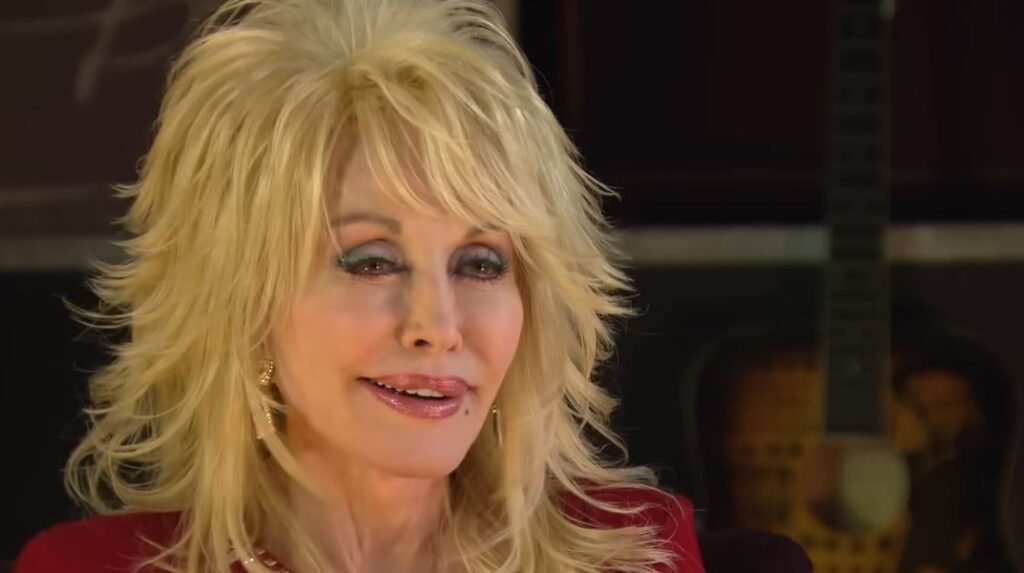
Her version of defiance was so successful because the audiences who were most likely to oppose it never felt threatened. It was truly radical for a woman to demand complete creative and financial control in the conservative world of country music. Parton just used pink chiffon to package it. She sang about unwed pregnancy in “Down from Dover,” workplace exploitation in “9 to 5,” and women’s autonomy in dozens of songs while grinning through lip gloss, making the audience laugh, and keeping the heat down. The rhinestones made conservative listeners feel at ease. Sometimes they were unaware of the conversations taking place between the sequins.
She also developed an early and long-lasting relationship with LGBTQ communities through her exaggerated, drag-adjacent style. She became a queer icon because of her image, not in spite of it. The reasoning was obvious: here was a woman who had completely created her own identity and recognized that selfhood could be an artistic endeavor rather than a fixed state. Those who had done the same thing just to survive could relate to that. Without pretense or showmanship, she embraced that connection, and it lasted.
All of this could be over-mythologized, and it’s important to recognize that her success continued to rely, at least in part, on a limited and sexualized standard of female appearance. Her conventional attractiveness was one of the reasons the country music industry rewarded her visibility. Her subversive intentions don’t make that tension go away. Nevertheless, she created something amazing within those limitations. She was in charge of her publishing, declined Elvis Presley’s offer to record “I Will Always Love You” because his manager wanted half the rights, and started Dollywood when most people didn’t think it was a good idea. The armor was made of rhinestones. The grin was a tactic.
A rhinestone doesn’t pretend to be something it’s not. It captures light according to its own terms and in its own manner. Dolly Parton was aware of this from the start, and for eight decades she wore it as a manifesto.
